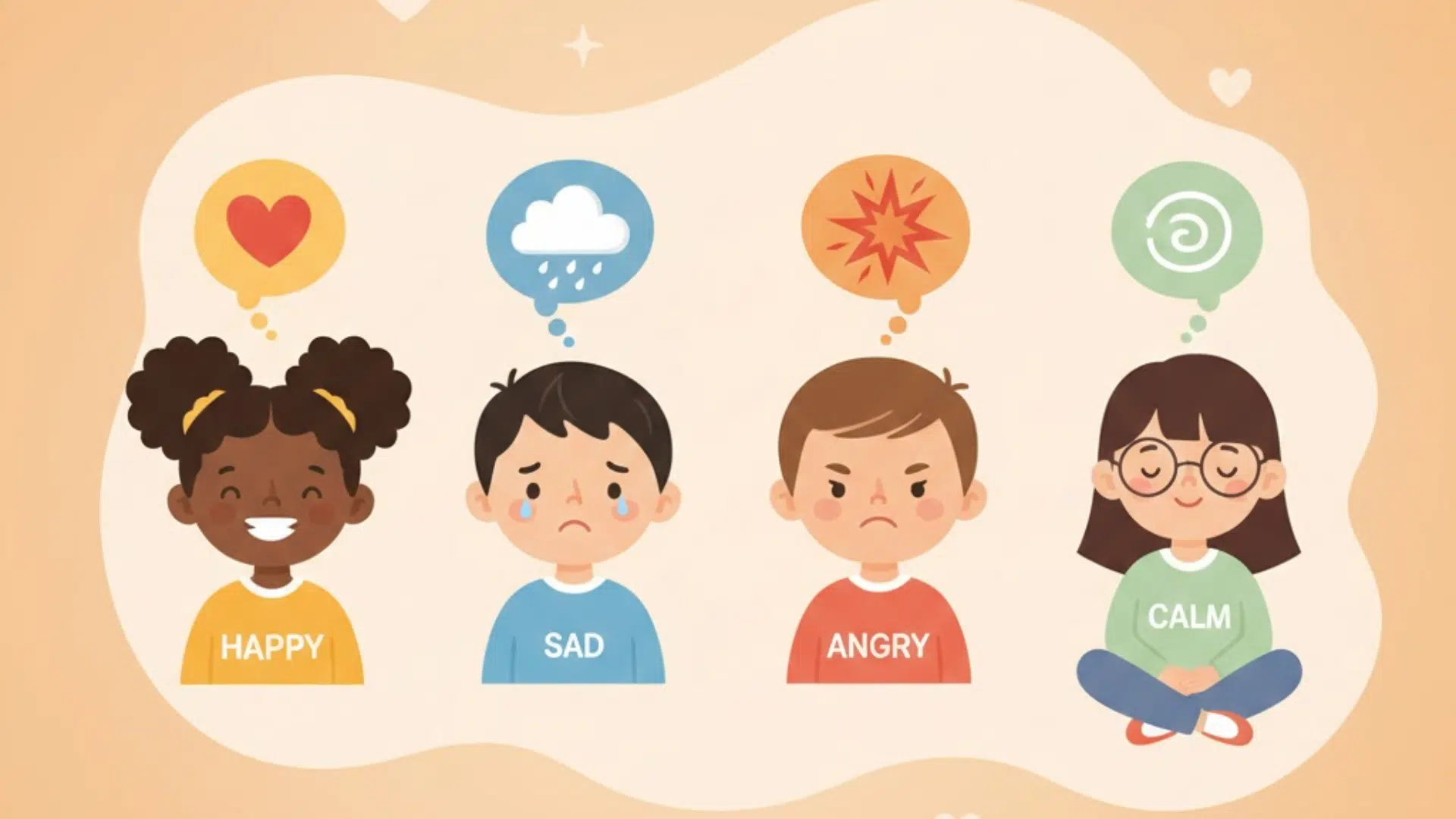
Big feelings can show up fast for kids. One small problem can turn into tears, yelling, or shutting down. When that happens, most kids are not trying to be difficult. They are still learning how to handle their emotions.
The good news is that this skill can be taught and practiced. With the right activities, kids can learn to calm their bodies, name their feelings, and respond in healthier ways.
In this guide, you’ll find simple emotional regulation activities for kids. These include worksheets, games, and calming exercises you can use at home or school.
Each idea is practical, easy to try, and made to fit real life.
Understanding Emotional Regulation in Kids
Emotional regulation is the ability to understand feelings and manage reactions in a helpful way.
For kids, this does not come naturally right away. They are still learning how to notice emotions, name them, and calm their bodies when things feel overwhelming.
A child might cry, yell, or shut down because they do not yet have the tools to cope. Learning emotional regulation helps kids handle frustration, stress, and change with more confidence.
It also supports better behavior, stronger friendships, and improved focus at school.
With practice and the right support, kids can learn simple strategies that help them feel more in control of their emotions each day.
Games that Teach Emotional Regulation Skills

Games make emotional regulation feel less like work and more like play. They give kids a safe way to practice handling feelings while staying engaged and relaxed.
1. Feelings Charades
This game helps kids learn how emotions look and feel in the body. One child acts out a feeling using facial expressions or body movement, while others guess the emotion.
After guessing, talk about a time they felt that way. This builds emotional awareness and helps kids understand that everyone experiences similar feelings. It also supports empathy and emotional language.
2. Calm-Down Bingo
Calm-Down Bingo turns coping skills into a fun challenge. Each square includes a simple calming action, like deep breathing, stretching, or getting a drink of water.
Kids mark a square when they try the skill. Over time, they learn which tools help them most. This game encourages practice during calm moments, not just during big emotions.
3. Red Light, Green Light with Feelings
This version adds emotions to a familiar movement game. Green means the body feels calm and ready. Yellow means feelings are building. Red means it’s time to pause and use a calming tool.
Kids learn to notice early signs of stress and stop before emotions get too big. It supports self-control and body awareness.
4. The Name It to Tame It Game
In this game, kids take turns naming feelings they felt during the day or week. Each turn helps them connect words to emotions.
Naming feelings makes them feel less scary and easier to manage. This game works well during family time or classroom circles. It also helps kids feel heard and understood.
5. Board Game Add-On
Any board game can become an emotional regulation activity. Focus on how kids handle winning, losing, and waiting. Pause the game if emotions rise and talk about coping choices.
This helps kids practice staying calm in real-life situations. It also teaches patience, flexibility, and respectful behavior.
Calming Exercises Kids Can Practice Anywhere
Calming exercises help kids slow down their bodies and minds when emotions feel big.
- Balloon Breathing: Kids pretend their belly is a balloon. They breathe in slowly to “fill” it, then breathe out to “let the air out.” This helps slow the heart rate and relax the body.
- 5-4-3-2-1 Grounding: Kids name five things they see, four they feel, three they hear, two they smell, and one they taste. This brings their focus back to the present moment.
- Progressive Muscle Squeeze: Kids squeeze one body part at a time, then relax it. This releases tension and helps them notice the difference between tight and calm.
- Wall Push or Chair Push-Ups: Pushing against a wall or chair gives the body deep pressure. This can help kids feel steadier and in control.
- Safe Place Visualization: Kids imagine a calm, happy place and describe what they see and feel. This helps create a sense of safety during stress.
With regular practice, these exercises can help kids calm down faster and feel more confident handling their emotions.
Age-Appropriate Emotional Regulation Activities
Kids need different emotional regulation activities as they grow. What works for a preschooler may not work for an older child.
| Age Group | What Kids Are Learning | Helpful Activity Ideas |
|---|---|---|
| Ages 3–5 | Naming feelings and calming the body | Feelings cards, bubble breathing, songs with emotions |
| Ages 6–8 | Understanding triggers and choices | Feelings thermometer, coping skills chart, role-play |
| Ages 9–12 | Managing emotions independently | Journaling prompts, problem-solving sheets, calm plans |
When activities fit a child’s age, kids are more likely to use them.
Printable Worksheets for Supporting Emotional Regulation
Worksheets can be a great way to help kids notice and handle their emotions. You can find free printable tools that guide kids through naming feelings, tracking moods, and learning coping skills.
Try a Feelings Thermometer Worksheet – this lets kids mark how strong their feelings are and think about what helps calm them.
Another helpful set is Zones of Regulation Printables, which uses colors to teach kids how big emotions feel and what strategies can help.
For more options, check out free emotional regulation worksheets from Goally that include mood charts and calming guides.
Tools that Help Kids Manage Big Feelings

Kids do better with emotional regulation when they have simple tools they can use again and again.
- Calm Corner Setup: A cozy spot with pillows, a timer, and feelings charts helps kids take a break and reset. It signals a safe space for calm.
- Coping Cards Ring: Make small cards with quick ideas like “breathe,” “stretch,” or “draw.” Kids can flip through them when they need a tool fast.
- Stress Ball or Putty: Squeezing a soft ball or putty gives kids something to focus on and can help ease tension.
- Noise Reducers: Headphones or ear defenders can help kids calm down in loud or busy places.
- Visual Timer: Seeing time pass helps kids understand how long to try a calming activity.
These help kids calm their bodies and think clearly when feelings get big.
What to Do When Kids are Upset
Big emotions can make it hard for kids to listen or think clearly. The words adults use during these moments can either calm the situation or make it feel worse.
1. Supportive Phrases During a Meltdown
When a child is very upset, keep your words short and calm. Say things like, “I see you’re having a hard time,” or “I’m here with you.” This helps kids feel safe instead of judged.
Avoid long talks or questions in the moment. A steady voice and simple words help their nervous system settle first.
2. Helping Kids Name Their Feelings
Once the child starts to calm down, help them put words to what they feel. You might say, “It looks like you’re feeling frustrated,” or “Are you feeling sad or angry?”
Naming emotions helps kids understand what’s happening inside their body. It also builds emotional language, which makes future meltdowns easier to manage.
3. Guiding Kids Toward Calming Choices
After feelings are named, gently guide kids toward a coping tool. Offer two simple choices, like deep breathing or taking a short break.
This gives kids a sense of control without overwhelming them. Over time, they learn which tools help them calm down faster and feel more in control.
Building Emotional Regulation Into Daily Routines
Emotional regulation works best when it becomes part of everyday life.
- Practice During Calm Moments: Teach coping skills when your child is relaxed, not upset. This helps the tools feel familiar and easier to use later.
- Use Daily Check-Ins: Ask simple questions like “How are you feeling today?” or use a feelings chart. This builds awareness and emotional language.
- Add Skills to Daily Routines: Try breathing before school, stretching after homework, or reflection at bedtime. Short routines work best.
- Model Calm Behavior: Kids learn by watching adults. Showing how you calm yourself teaches more than words.
- Praise Effort, Not Perfection: Notice when kids try to regulate, even if it’s not perfect. This builds confidence.
With steady practice, emotional regulation becomes a natural part of a child’s day.
Conclusion
Emotional regulation is a skill kids learn over time, not something they master overnight.
Big feelings are part of growing up, and with the right support, kids can learn how to handle them in healthy ways. Simple activities, games, worksheets, and daily routines can make a real difference.
The key is practice, patience, and consistency. Start small and focus on a few tools your child connects with most. Over time, these tools can help reduce meltdowns and build confidence.
If you’re ready to help your child manage big emotions better, try adding one activity from this guide today. Small steps can lead to calmer moments and stronger emotional skills.