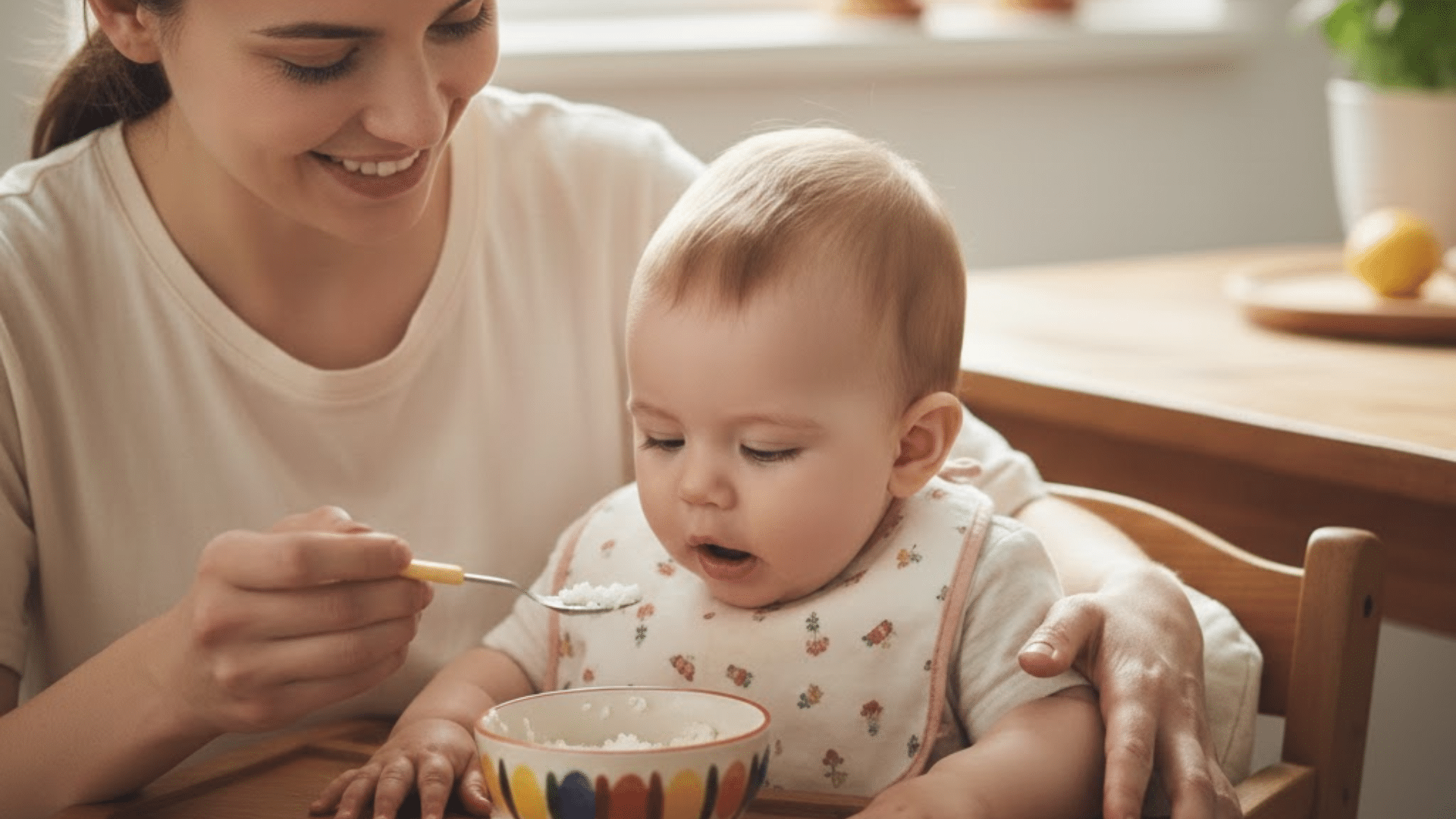
Starting solids is a big step, and it often comes with lots of questions. One of the most common questions parents ask is when babies can eat rice.
You may hear different answers from family, friends, or even online forums, which can make things confusing.
In this guide, you’ll learn when babies can eat rice, how to introduce it safely, and what to watch out for. Some babies handle rice well, while others may need more time or different grains first.
Quick Answer: When Can Babies Eat Rice?
Most babies can eat rice around 6 months of age, once they are ready for solid foods. This is when babies can sit with support, hold their head steady, and bring food to their mouth.
Rice is often one of the first foods parents think about, but it does not need to be the very first food. If you choose rice, it should be very soft and easy to swallow.
Some baby food labels mention 4 months, but many experts suggest waiting until closer to 6 months. Always follow your baby’s cues and talk to your pediatrician if you’re unsure.
Rice vs. Rice Cereal: What’s the Difference?
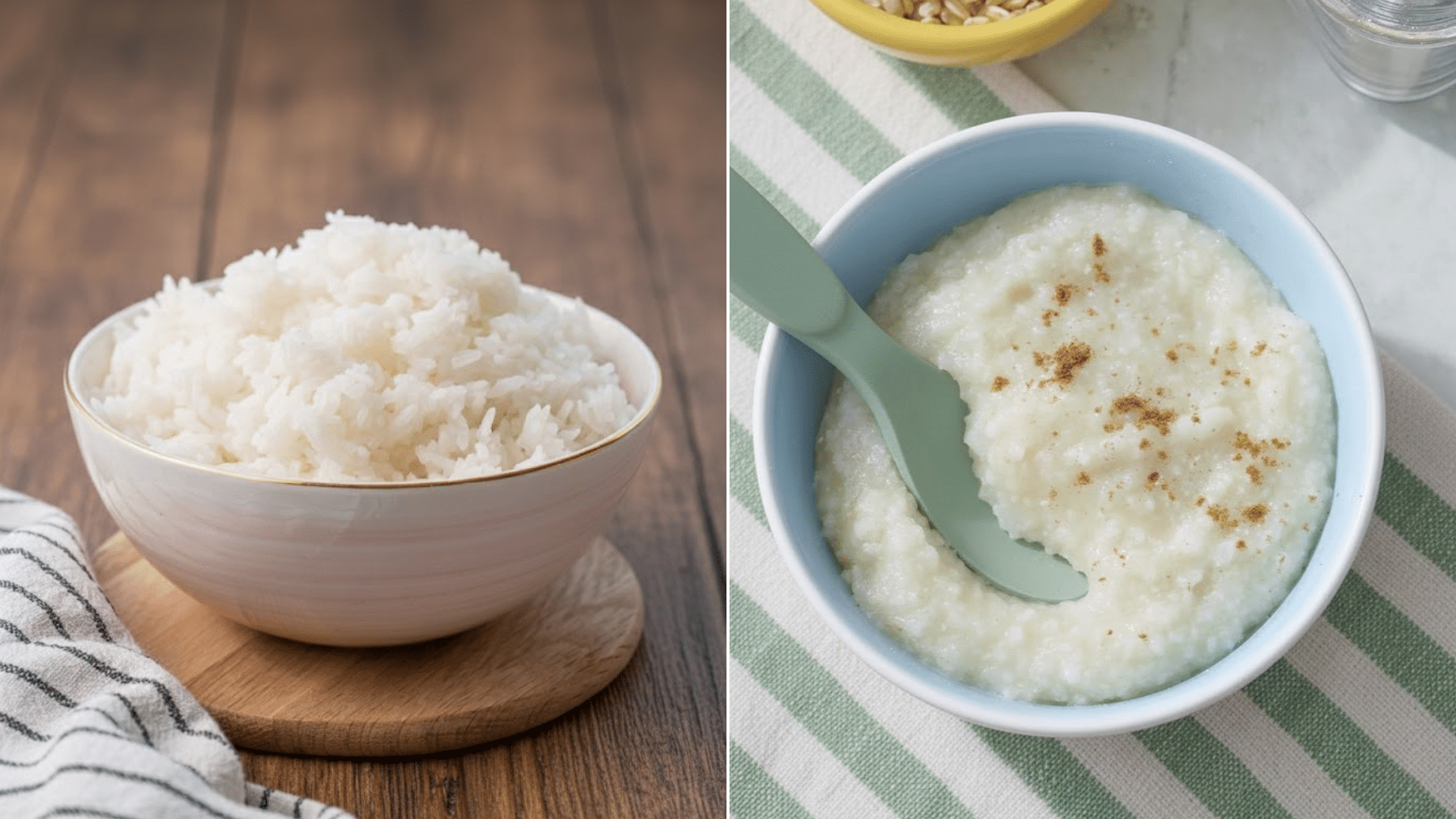
Both rice and rice cereal are common choices when babies start solids, but they are not the same.
| Feature | Plain Cooked Rice | Infant Rice Cereal |
|---|---|---|
| Texture | Grainy, even when soft | Smooth and easy to thin |
| Ease for beginners | Harder for new eaters | Easier for the first spoon feeds |
| Iron content | Low | Often iron-fortified |
| Choking risk | Higher if grains are loose | Lower when mixed thin |
| Flexibility | Best mixed into meals later | Easy to adjust thickness |
Both options can fit into a baby’s diet at different stages. What matters most is serving rice in a safe texture and offering a mix of other grains as your baby grows.
Best Ages to Introduce Rice to Babies
Babies handle rice differently as they grow, so age and readiness both matter. The key is to match the texture of rice to your baby’s eating skills and comfort level.
Around 6 Months: First Tastes
At this stage, babies are just learning how to move food in their mouths and swallow. If you offer rice, it should be very soft and smooth.
Thin rice cereal fed with a spoon is usually easier than plain rice. Start with small amounts, like a few teaspoons, and watch how your baby reacts. Rice does not need to be a daily food at this age.
7–9 Months: More Texture
Between 7 and 9 months, babies can handle thicker textures and soft lumps. Rice can be mixed into mashed vegetables, lentils, or yogurt if already introduced.
The goal is to help your baby learn to chew, even without teeth. Avoid loose, dry rice grains, as they can be harder to manage. Continue offering other grains for balance.
9–12 Months: Family-Style Rice
By this stage, babies are better at chewing and self-feeding. Soft, well-cooked rice can be part of regular meals. Sticky or clumped rice works better than scattered grains.
You can mix rice with veggies, beans, or mild spices for flavor. Always supervise meals and make sure the rice is soft enough to mash easily with your fingers.
Nutrition Benefits of Rice for Babies
Rice is often chosen as a starter food because it is simple and easy to prepare.
- Easy source of energy: Rice provides carbohydrates, which give babies quick energy for growth and daily activity.
- Mild taste and gentle on the stomach: Its neutral flavor makes it easier for babies to accept, especially during early feeding stages.
- Low in natural allergens: Rice is less likely to cause allergic reactions, which can feel reassuring for many parents.
- Iron-fortified cereal option: Infant rice cereal often contains added iron, which supports healthy brain development.
Rice alone does not offer complete nutrition, so it’s important to pair it with foods rich in protein, healthy fats, fruits, and vegetables as your baby grows.
Arsenic Concerns with Rice and Rice Cereal
Rice can absorb arsenic from soil and water, so babies may get more exposure if rice or rice cereal is a daily staple.
This doesn’t mean you must avoid rice completely. The goal is to lower risk by offering variety and using safer cooking and feeding habits.
| Concern | Why It Matters for Babies | Simple Ways to Reduce Risk |
|---|---|---|
| Higher exposure from frequent rice | Babies are small, so exposure adds up faster | Rotate grains (oats, barley, multigrain) |
| Infant rice cereal use | Can become an “everyday” first food | Don’t rely on rice cereal daily |
| Rice cooking method | Some methods keep more arsenic in the food | Rinse rice; cook in extra water and drain |
| Limited grain variety | Less variety means higher repeat exposure | Mix in other grains during the week |
A little rice is usually fine – just keep it balanced with other grains and foods.
How to Introduce Rice Safely
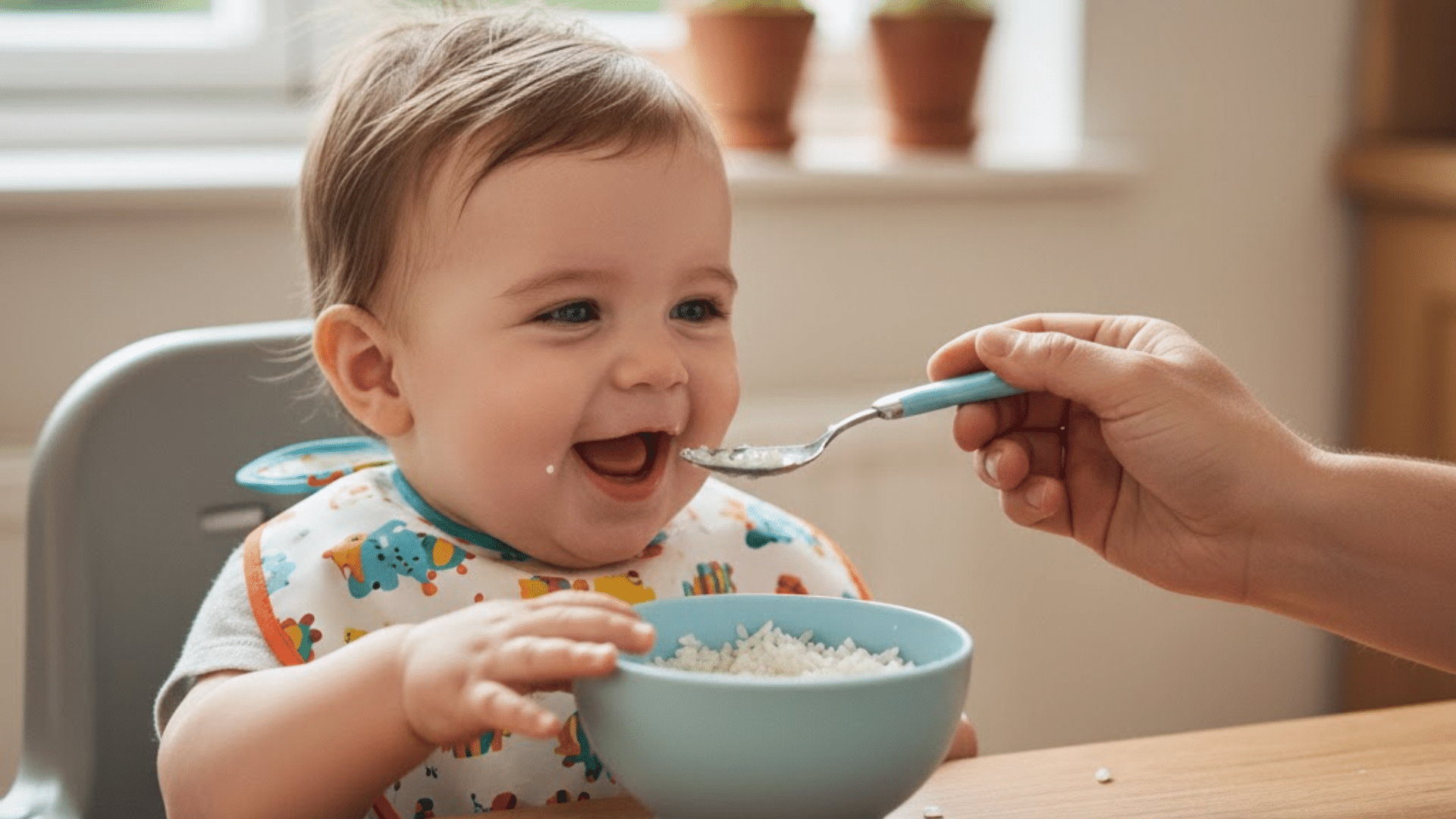
Introducing rice should be slow and simple, just like any first food. Paying attention to texture, timing, and your baby’s cues can help make the process safer and less stressful.
1. Choose the Right Form of Rice
Start with a form that is easy to swallow and gentle on your baby’s mouth. Thin rice cereal fed with a spoon is often easier for beginners than plain rice.
If using cooked rice, make sure it is very soft and fully cooked. Avoid dry, fluffy, or loose grains in the early stages. The food should mash easily between your fingers.
2. Start with Small Amounts
Begin with one or two teaspoons at a time. This helps your baby get used to the new texture without feeling overwhelmed.
Watch for signs of discomfort, gagging, or tummy changes. There is no need to rush or increase portions quickly.
3. Keep Milk Feeds as the Main Nutrition
Breast milk or formula should still provide most of your baby’s nutrition during the early months. Rice and other solids are meant to support learning, not replace milk feeds.
Always offer milk before solids, especially in the beginning. This helps ensure your baby stays full and hydrated.
4. Rotate Grains and Foods
Avoid serving rice every day, especially during the early months. Rotate with other grains like oats, barley, or multigrain cereals to add variety.
This helps lower arsenic exposure and improves nutrition. It also helps your baby get used to different flavors and textures over time.
What Parents Have to Say About Rice
Many parents say rice is often suggested to help babies sleep longer, but their real-life experience doesn’t match that promise. Several shared that adding baby rice changed nothing about night waking or sleep patterns.
“Introducing solids made not a jot of difference to their sleeping patterns.” – Mumsnet forum
Some parents point out that milk already provides more nutrition than rice in the early months. They feel baby rice is often overrated and not necessary when babies are still relying mostly on breast milk or formula.
“There are far more calories in milk than purees and baby rice.” – Mumsnet forum
Safety concerns also come up often in discussions. Parents warn against adding rice cereal to bottles, saying they were advised this practice is outdated and risky, even if it was common years ago.
“Please don’t add baby rice to a bottle. It is a choking hazard.” – Mumsnet forum
Others question the nutritional value of baby rice and prefer offering a wider range of foods instead. They feel variety matters more than sticking to rice as a first food.
“Baby rice has no nutritional value.” – Mumsnet forum
Choking Risks and Rice Safety
Rice can be tricky for babies, especially when they are new to solids. The shape and texture of rice matter just as much as the age of your baby.
- Loose rice grains can be hard to manage: Individual grains can scatter in the mouth and are difficult for early eaters to control.
- Dry or undercooked rice increases risk: Rice should always be very soft and easy to mash between your fingers.
- Rice cereal in a bottle is not safe: Adding cereal to bottles can raise choking risk and does not help babies sleep longer.
- Texture matters more than the food itself: Mixing rice into thick mash or serving sticky clumps makes it easier to handle.
With close supervision and the right texture, rice can be served more safely as part of your baby’s meals.
Conclusion
Deciding when and how to give rice to your baby doesn’t have to feel stressful.
Rice can fit into your baby’s diet, but it works best when it’s introduced at the right time and served in a safe texture.
Paying attention to readiness signs, offering small amounts, and rotating grains can go a long way. It also helps to remember that rice is just one option, not a must-have first food.
Every baby is different, and what works for one may not work for another.
If you’re unsure, your pediatrician can guide you. Trust your instincts, follow your baby’s cues, and focus on balance as your baby grows.