

Teething can bring a lot of changes, and skin rashes are one of them. If you’ve noticed red or bumpy skin around your baby’s mouth, chin, or neck, it can be worrying at first.
I remember wondering if it was something serious or just part of teething. A teething rash is often easy to manage with simple care at home.
In this guide, you’ll learn what a teething rash looks like, why it happens, and how to treat it safely.
The goal is to help you feel calm, informed, and confident when caring for your baby’s skin.
What is a Teething Rash?
A teething rash is a common skin irritation that shows up when babies start teething. It is usually caused by extra drool staying on the skin for long periods.
This drool can irritate sensitive baby skin and lead to redness, small bumps, or dry patches. Teething rashes often appear around the mouth, chin, neck, or upper chest, where drool collects the most.
While it may look uncomfortable, a teething rash is usually harmless and not painful.
With gentle cleaning and basic skin care, it often clears up quickly. Knowing what it is can help you treat it early and keep your baby comfortable.
What a Teething Rash Looks Like
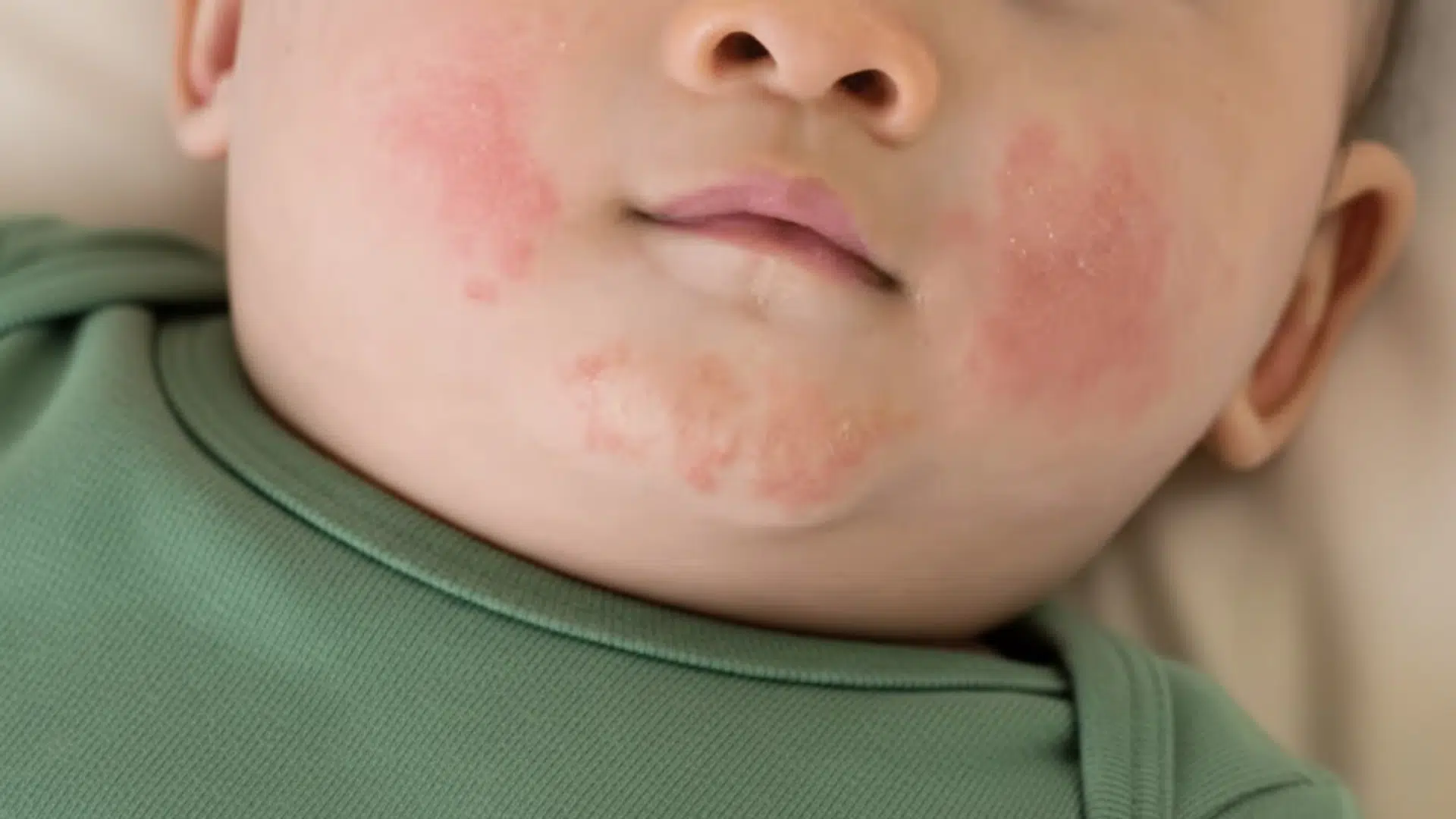
A teething rash can look different from baby to baby, but there are a few common signs most parents notice.
- Red or pink skin: The area may look irritated, especially after heavy drooling.
- Small red bumps: Tiny bumps often appear around the mouth or chin.
- Dry or chapped patches: Skin can look rough or flaky from constant moisture.
- Shiny or wet-looking skin: Drool sitting on the skin can make it look damp.
- Rash in drool zones: Common areas include the chin, around the mouth, neck folds, and upper chest.
Knowing what to look for can help you spot it early and care for your baby’s skin.
Teething Rash vs. Other Baby Rashes
It can be hard to tell a teething rash apart from other baby rashes at first. I found that comparing key signs side by side makes it much easier to understand what’s going on.
| Rash Type | What It Looks Like | Where It Appears | Key Difference |
|---|---|---|---|
| Teething Rash | Red or pink skin, small bumps, chapped patches | Chin, around the mouth, neck, and upper chest | Linked to drooling and moisture |
| Eczema | Very dry, rough, itchy patches | Cheeks, arms, legs, body | Not limited to drool areas |
| Heat Rash | Tiny red or clear bumps | Neck, back, skin folds | Caused by sweat and heat |
| Allergic Rash | Red patches, hives, swelling | Anywhere on the body | Appears after new food or product |
| Yeast Rash | Bright red rash, may look shiny | Neck or diaper folds | Often lasts longer and worsens |
If a rash does not improve or seems unusual, it is always best to check with your pediatrician.
How to Treat a Teething Rash
A teething rash may look uncomfortable, but it is usually easy to manage at home. Simple care and gentle habits can help soothe your baby’s skin and prevent it from getting worse.
1. Gentle Cleaning and Drying
Clean the drool-covered area with lukewarm water and a soft cloth. Gently pat the skin dry instead of rubbing, since rubbing can make irritation worse.
Try to clean the area a few times a day, especially after feeds or naps. Keeping the skin clean helps remove saliva that can irritate it. Always be gentle, as baby skin is very sensitive.
2. Use a Protective Barrier
Applying a thin layer of barrier cream can help protect the skin from moisture. These creams create a shield that keeps drool from sitting directly on the skin.
Use a small amount and reapply as needed throughout the day. Focus on areas where drool collects the most, like the chin and neck. This step can make a big difference in healing.
3. Keep the Area Dry During the Day
Change wet bibs and clothes often to keep drool away from the skin. Leaving damp fabric on the rash can make it worse. Absorbent bibs can help catch drool before it reaches the skin.
Gently dab away drool when you notice it, instead of wiping hard. Small habits like this help prevent ongoing irritation.
4. Protect the Skin During Sleep
Babies often drool more while sleeping, which can irritate the skin overnight. Before naps or bedtime, gently clean and dry the area.
Apply a light layer of barrier cream to protect the skin while your baby sleeps. Make sure bedding and sleepwear are dry and soft. This extra step can help reduce redness by morning.
Teething Rash on the Face

A teething rash on the face is very common during drooly teething stages. Since saliva stays on the skin for long periods, the face is often the first place parents notice irritation.
This type of rash usually shows up during heavy drooling and may come and go as teething continues.
Common areas affected on the face:
- Chin and jawline
- Around the mouth and lips
- Lower cheeks near the mouth
The skin may look irritated after naps or feeding times, when drool has been sitting longer.
What a teething rash on the face looks like:
| Sign | What It Means |
|---|---|
| Redness around mouth | Skin irritation from drool |
| Small bumps on chin | Mild inflammation |
| Dry, cracked skin | Saliva breaking skin barrier |
How to care for a facial teething rash:
- Gently clean drool with water and pat dry
- Dab drool often instead of wiping
- Use a thin barrier to protect the skin
- Keep pacifiers and bibs clean and dry
With regular care, facial teething rashes usually improve quickly.
Teething Rash on the Stomach
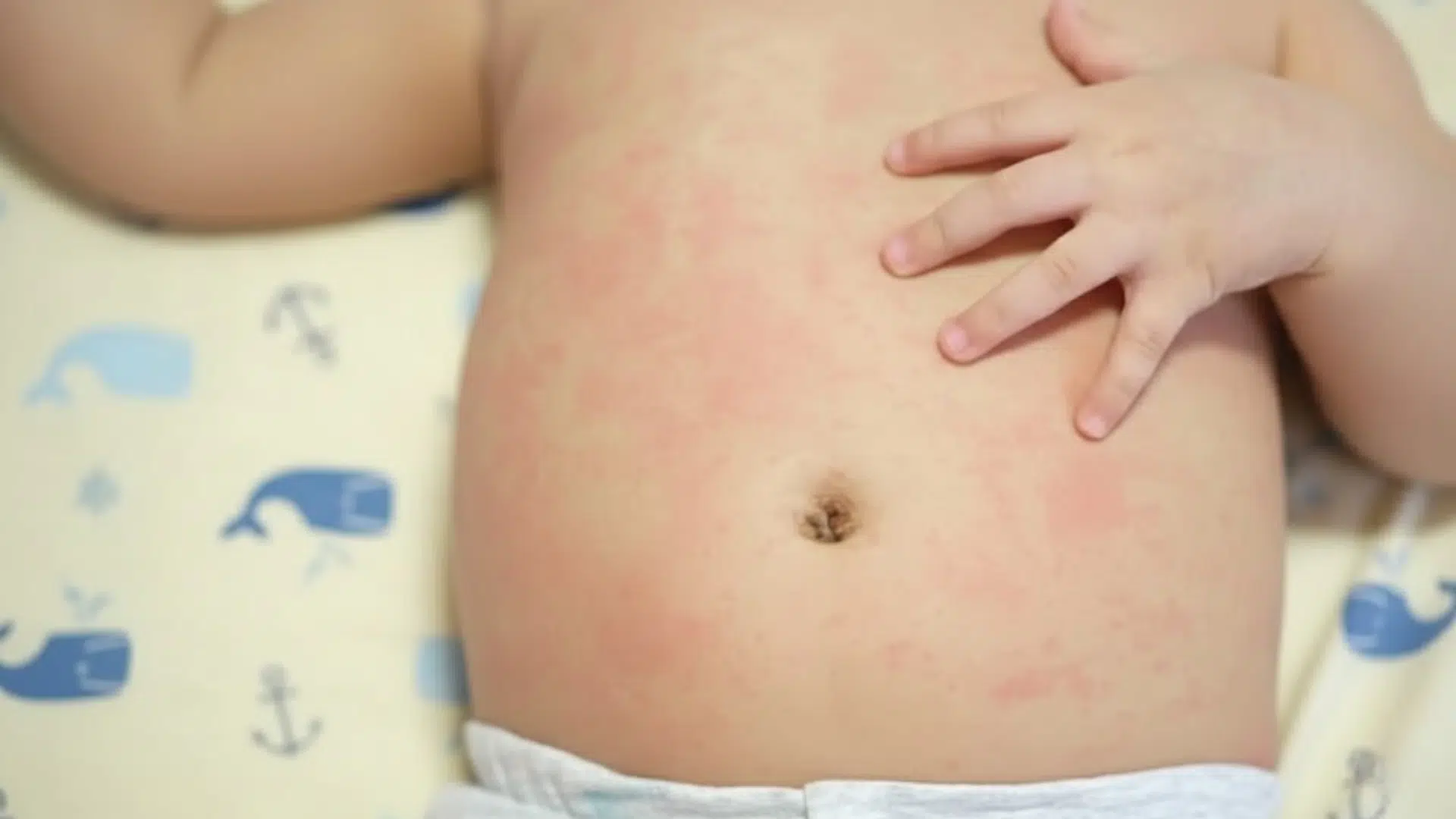
A teething rash on the stomach is less common but can still happen, especially during heavy drooling phases. It often appears when drool drips down onto clothing and stays against the skin.
This type of rash is usually mild and linked to moisture and friction rather than teething itself.
Why it can appear on the stomach:
- Drool running down from the mouth
- Wet clothing resting on the upper stomach
- Baby lying down for long periods
- Sensitive skin reacting to constant dampness
Key notes:
| Feature | Teething Rash on Stomach |
|---|---|
| Location | Upper stomach or chest |
| Severity | Usually mild |
| Cause | Moisture + wet fabric |
| Healing time | Improves with dryness |
How to manage a teething rash on the stomach:
- Change wet clothes as soon as possible
- Dress baby in soft, breathable fabrics
- Keep the skin clean and gently dried
- Avoid tight or rough clothing
Teething rashes on the stomach usually clear up once the skin stays dry and irritation is reduced.
When to See a Pediatrician
Most teething rashes are mild and clear up with basic care, but some signs should not be ignored. Call your pediatrician if the rash looks infected, with oozing, pus, swelling, or yellow crusts.
Get medical advice if the rash does not improve after a few days of gentle home treatment.
You should also seek help if your baby has a high fever, seems very uncomfortable, or is unusually fussy.
Rashes that spread quickly, blister, or appear in areas not touched by drool may not be teething-related. When in doubt, it is always safer to have your baby checked by a doctor.
How to Help Prevent Teething Rash
Teething rash prevention is mostly about timing and awareness, not more products.
- Create “dry skin check” moments: Check the chin, neck, and chest after feeds, naps, and car rides.
- Layer protection before drool peaks: Apply a light barrier before long drooling periods, not after irritation starts.
- Rotate bib styles during the day: Switch between absorbent and breathable bibs to reduce trapped moisture.
- Limit skin contact with wet toys: Drooly teethers pressed against the face can hold moisture on the skin.
- Watch for early color changes: Light pink skin often comes before bumps or dryness.
Small timing changes can help protect your baby’s skin long before irritation sets in
Conclusion
Teething rashes can look uncomfortable, but they are usually a normal part of the teething stage. With gentle care, most rashes clear up and come and go as drooling increases.
I know it can feel stressful to see changes on your baby’s skin, but understanding what causes a teething rash makes it much easier to handle.
Simple steps like keeping the skin dry, using gentle products, and watching for warning signs can go a long way.
If you ever feel unsure, trust your instincts. For more baby care tips and easy guides, check out our blogs and stay informed.