Watching a baby take those first steps is exciting and a little nerve-wracking. Many parents wonder when it should happen and if their child is on track.
Babies do not all walk at the same time, and that is normal. Some start early, while others take their time and focus on other skills first.
I remember how confusing it can feel when comparing timelines. This guide breaks down when babies usually start walking, the milestones that come before it, and the signs that walking may be close.
You will also learn what can affect walking age and when it makes sense to check in with a doctor.
When Do Babies Start Walking?
Most babies usually start walking between 9 and 18 months, with many taking their first steps around their first birthday.
Some babies walk earlier, while others wait a little longer, and both can be normal. Walking is not just about leg strength. It also depends on balance, coordination, and confidence.
As long as your baby keeps gaining new skills, a later walking age is often nothing to worry about.
Major Signs a Baby is Ready to Walk
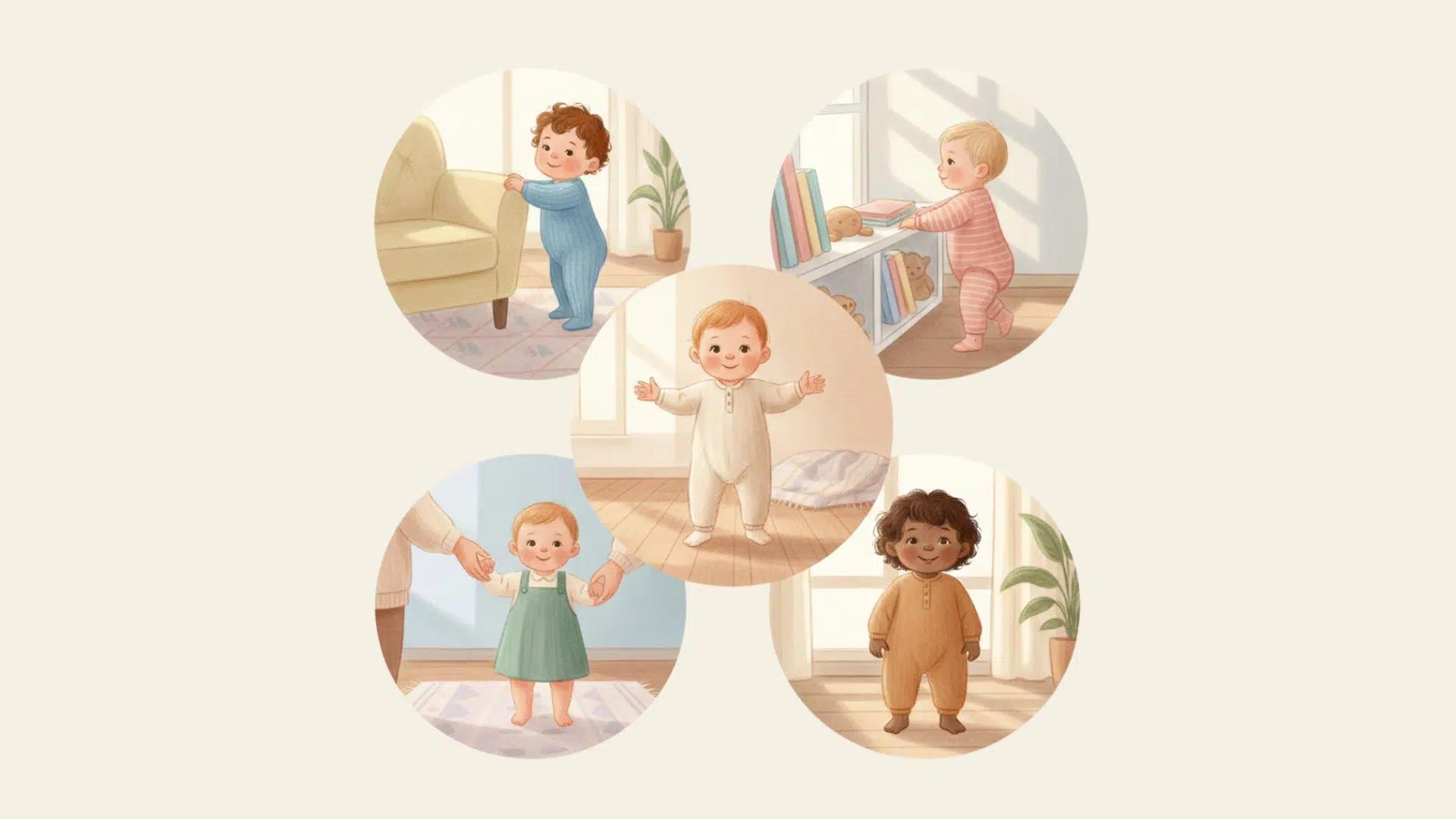
Walking often comes with clear signs that show a baby is getting close. I have found that noticing these small changes can make the waiting period feel easier and more reassuring.
1. Pulling Up to Stand
When a baby starts pulling up to stand using furniture, it shows strong leg and core muscles. This movement also helps them learn how to shift their weight safely.
Many babies repeat this action again and again because it feels new and exciting. Pulling up to stand is one of the clearest signs that walking skills are developing. It often appears weeks or even months before independent walking.
2. Cruising Along Furniture
Cruising happens when a baby walks sideways while holding onto a couch, table, or crib rail. This stage helps babies practice stepping while staying supported.
It also teaches balance and coordination as they move from one surface to another. Cruising builds confidence and shows that a baby is comfortable being upright. Most babies cruise for a while before letting go completely.
3. Standing without Support
Standing alone, even for a few seconds, is an important step toward walking. It shows improved balance and body control.
Babies may stand, wobble, and then sit back down, which is all part of learning. These short moments help them trust their own strength. Over time, standing lasts longer and feels less scary.
4. Taking Assisted Steps
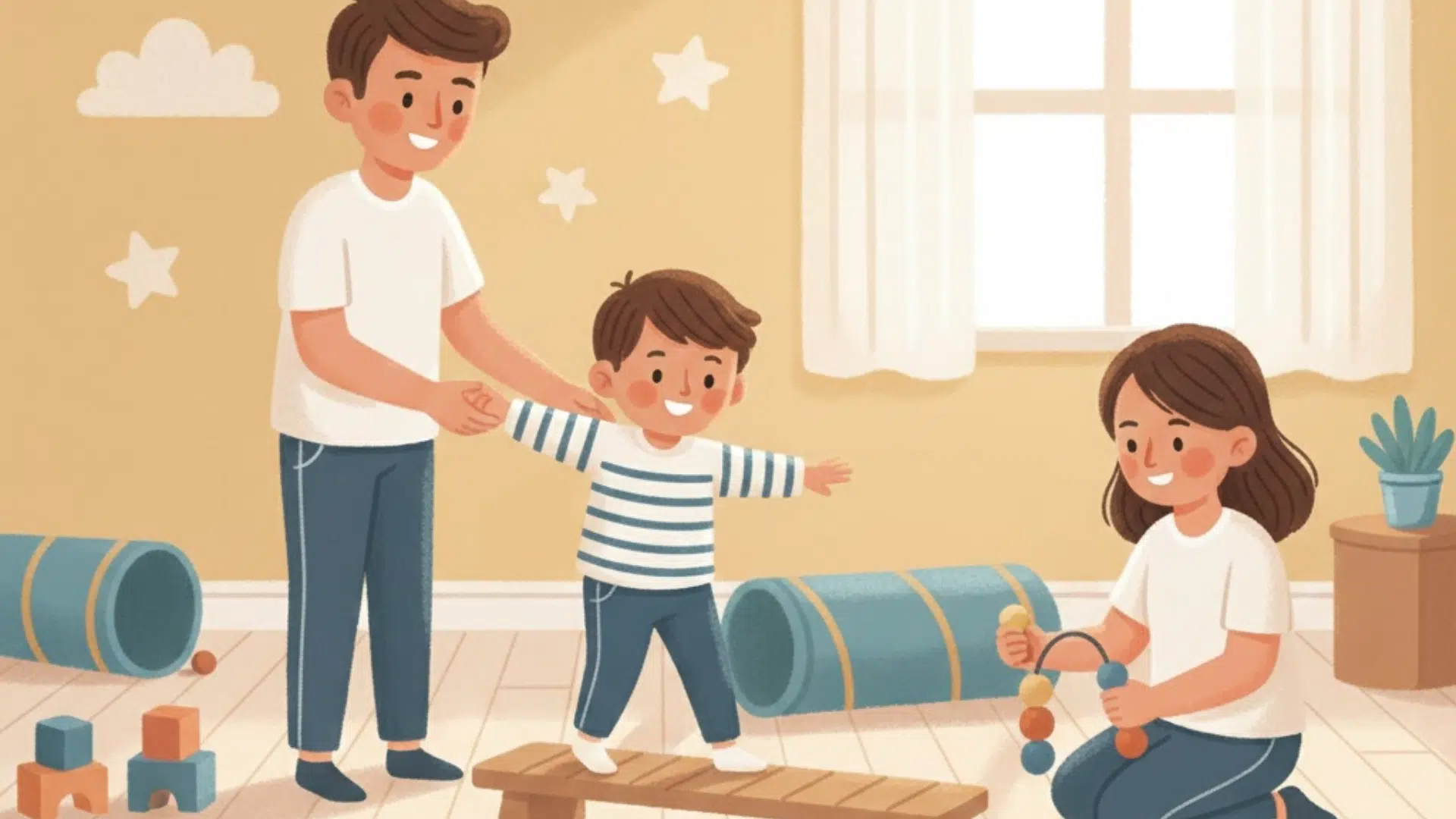
Some babies enjoy walking while holding an adult’s hands. This helps them understand how stepping forward works. Assisted walking allows babies to practice balance without falling.
As confidence grows, they may loosen their grip or take steps toward you. This stage often leads directly to first independent steps.
5. Improved Balance and Fewer Falls
As babies get closer to walking, their movements become smoother and more controlled. They may fall less often while standing or cruising.
When they do fall, they recover more quickly. This improved balance shows that their muscles and coordination are working together. It is a strong sign that walking is not far away.
Baby Walking: Complete Timeline
Every baby follows their own walking timeline, and progress can look different from one child to another.
| Age Range | What Babies May Do | Why It Matters |
|---|---|---|
| 4–6 months | Push up, roll, enjoy tummy time | Builds core and arm strength |
| 6–8 months | Sit without help | Improves balance and posture |
| 8–10 months | Crawl or scoot, pull up to stand | Strengthens legs and coordination |
| 9–12 months | Cruise, stand briefly alone | Teaches weight shifting and control |
| 12–15 months | Take first steps | Develops balance and confidence |
| 15–18 months | Walk more steadily | Improves stability and movement flow |
Note: This timeline is a general guide, not a strict rule.
Walking Milestones After First Steps
First steps are just the beginning of learning to walk. After that, babies continue to build strength, balance, and control through daily movement and practice.
- Walking longer distances: Baby starts walking across a room without stopping for support.
- Fewer falls: Balance improves, and falls happen less often than before.
- Changing direction: Baby learns to turn, stop, and start again while walking.
- Carrying objects: Baby walks while holding toys or small items.
- Faster movement: Walking becomes quicker and may lead to early running.
Walking skills grow with time and practice. Every step helps babies feel more confident and steady on their feet.
Factors That Affect When Babies Walk
Babies do not all walk at the same age, even when they are healthy and growing well. Several everyday factors can change when walking starts, and most of them are completely normal.
| Factor | What It Means | How It Can Affect Walking |
|---|---|---|
| Physical Strength | Muscle strength and balance in the legs and core | Stronger muscles can help babies stand and walk sooner |
| Personality | How bold or cautious a baby is | Careful babies may wait longer before trying first steps |
| Practice Time | Time spent moving on the floor | More floor time helps build balance and confidence |
| Family History | When parents or siblings walked | Walking age can follow family patterns |
| Environment | Space and safety at home | Open, safe spaces encourage movement and practice |
All babies develop at their own pace, and these differences are part of normal growth. I always say that steady progress matters more than exact timing, and patience often makes the journey easier for both baby and parent.
How to Encourage Walking Safely
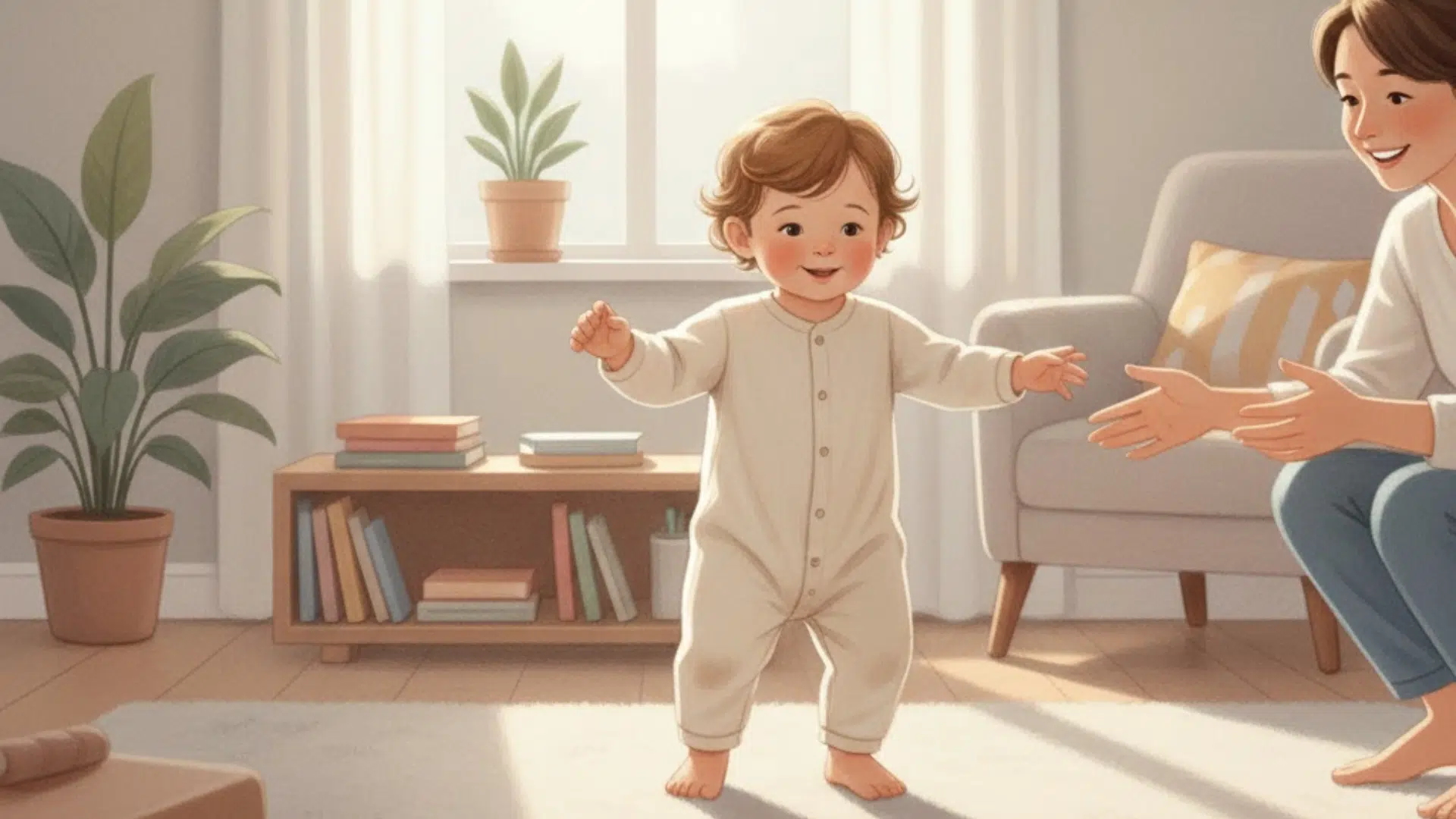
Babies learn to walk best when they feel safe and supported.
- Give plenty of floor time: Let your baby move freely on the floor to practice standing and balancing.
- Hold hands for support: Gently holding both hands can help your baby try a few steps safely.
- Use sturdy furniture: Couches and low tables give safe support for pulling up and cruising.
- Choose stable push toys: Wide, heavy push toys help babies practice walking without tipping over.
- Let bare feet lead indoors: Bare feet or grip socks help with balance and control.
Encouraging walking is about support, not pressure. When babies feel safe and relaxed, they are more likely to try new movements at their own pace.
When to Be Concerned About Late Walking
Most babies walk within a wide and normal age range, so a later start does not always mean a problem. Still, there are times when checking in with a doctor can bring peace of mind.
Typical Delays vs. Red Flags
Some babies take longer to walk, but continue gaining other movement skills. This is often normal, especially if they pull up, cruise, and stand with support.
A major red flag is losing skills they once had, which should always be checked. Patterns matter more than one missed milestone.
Note: Concern may rise if a baby is not standing, cruising, or showing progress by 15–18 months.
When to Talk to a Pediatrician
It is a good idea to speak with a doctor if your baby is not walking on their own by 18 months. You should also ask if movement looks very stiff or very floppy, or if one side seems weaker.
Doctors may observe movement and suggest early support if needed. Early help can make a big difference and does not always mean something serious.
Conclusion
Learning when babies start walking can feel confusing, especially with so many timelines and opinions around.
The truth is that walking looks different for every child, and a wide range of ages can still be normal. What matters most is steady progress, growing strength, and confidence over time.
Watching for milestones, offering safe support, and knowing when to ask for help can make this stage feel less stressful.
I hope this guide helped answer your questions and eased some worries. If you ever feel unsure, trust your instincts and reach out to your child’s doctor for guidance.
For more simple and helpful parenting tips, check out more of our related baby development guides and stay informed every step of the way.