Babies love to bounce, but are baby jumpers safe? These popular seats let little ones move and play while parents enjoy a short break.
Some experts say a little bouncing can be fun, while others caution that too much time in a jumper might affect natural movement and muscle growth.
Understanding the facts can help you make the best choice for your baby.
This article explains what baby jumpers are, why they’re so popular, and what you should know before adding one to your routine.
What is a Baby Jumper?
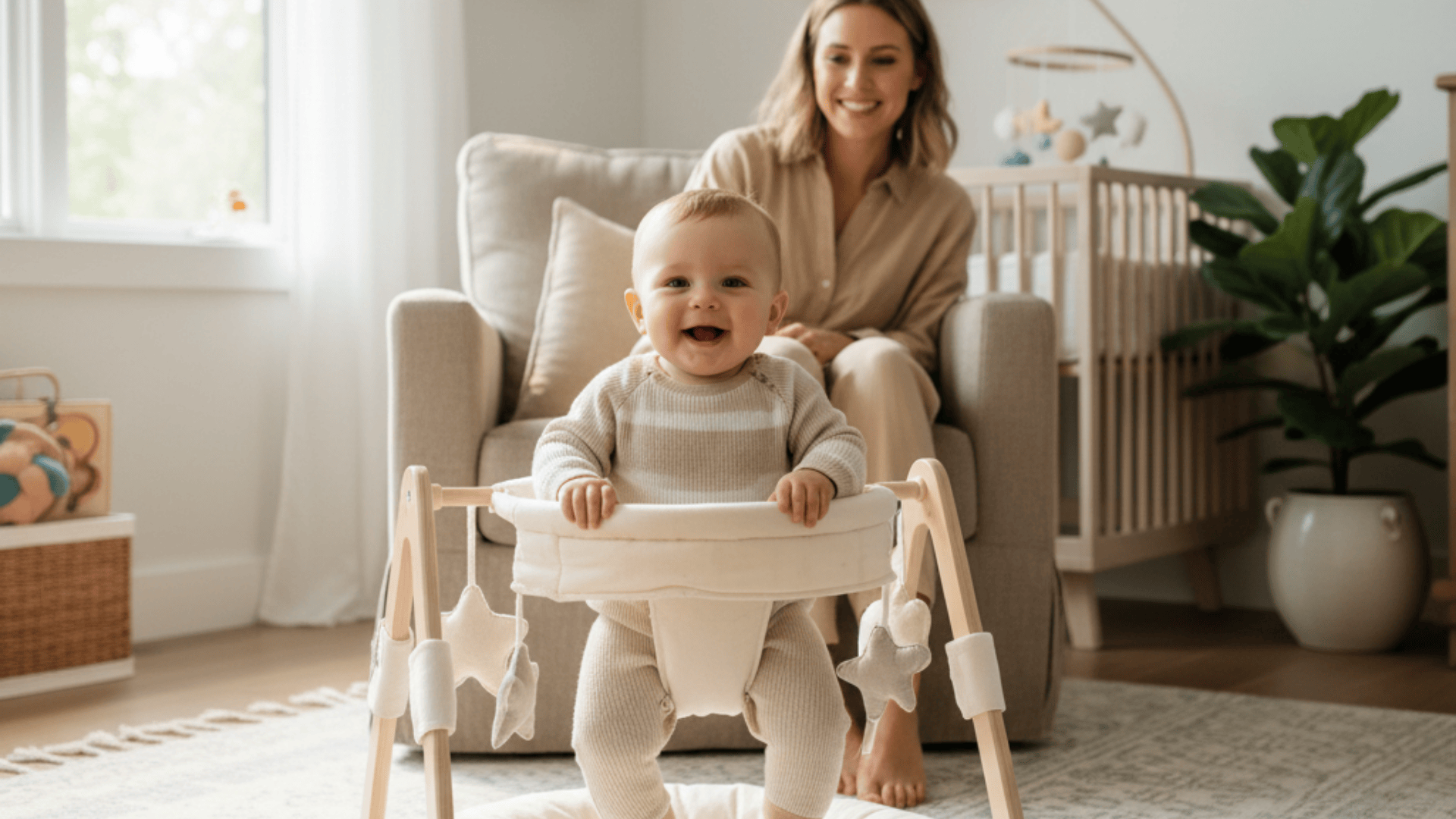
A baby jumper is a seat that lets babies bounce in place using their legs. It has a padded seat with elastic straps or springs for gentle motion.
There are three main types: doorway jumpers that hang from door frames, stationary jumpers with built-in stands, and activity centers with toys and music.
Parents use jumpers for short play sessions or brief breaks. The bouncing keeps babies entertained and lightly exercises their legs, but it shouldn’t replace floor play or crawling.
Are Baby Jumpers Safe?
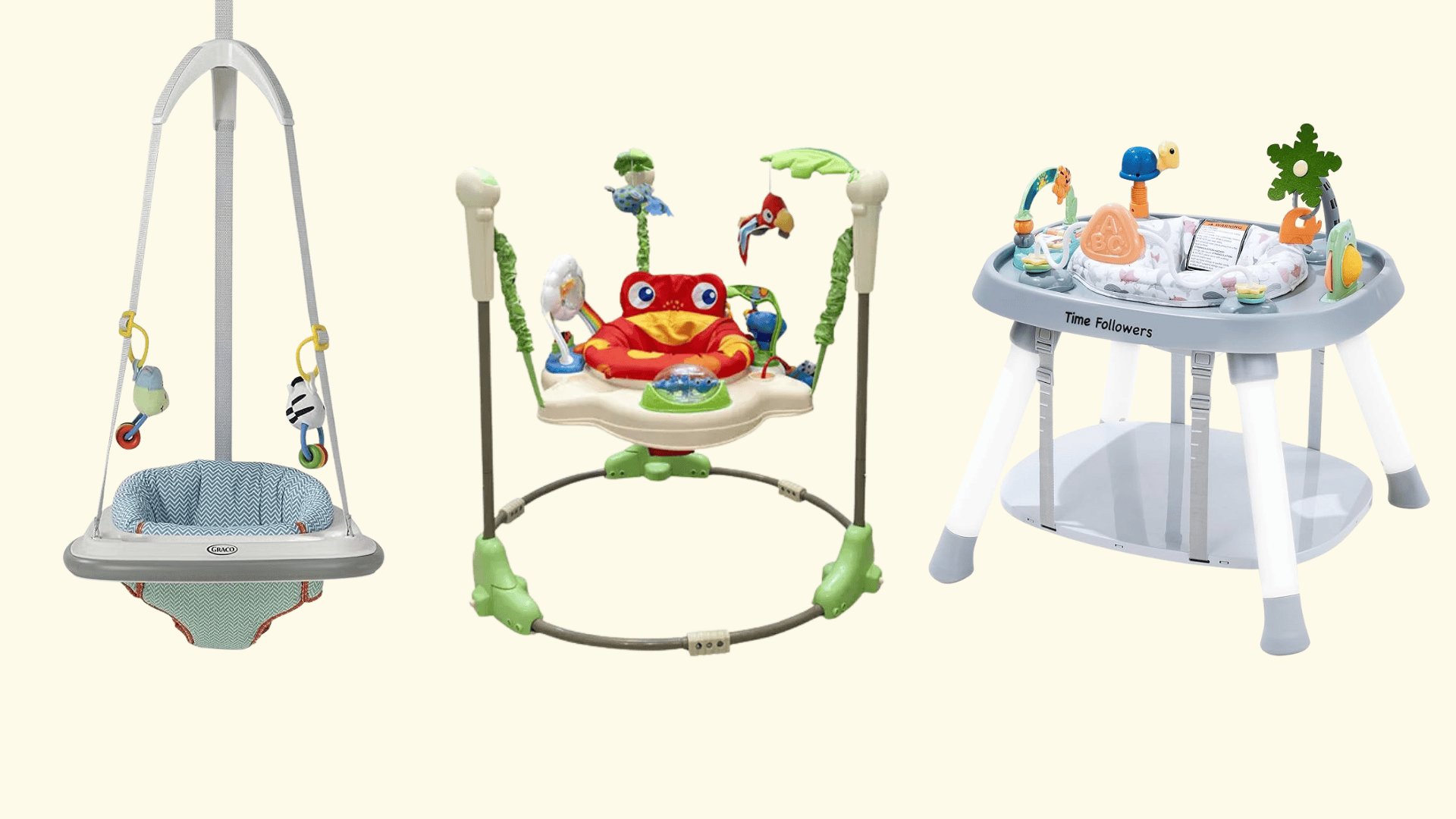
Baby jumpers can be fun for short playtime, but safety depends on how they’re used and for how long. Experts often share mixed opinions, so it’s important to understand both sides before deciding what’s best for your baby.
What Experts Say
According to WebMD and the Hospital for Special Surgery (HSS), jumpers can be used safely once a baby has strong head and neck control.
However, pediatricians and physical therapists warn that jumpers may not support healthy motor development if used too often.
They explain that while babies enjoy the bouncing motion, it doesn’t strengthen the same muscles needed for crawling or walking.
Many pediatric PTs recommend floor play, rolling, and tummy time instead, as these movements promote natural coordination and balance.
Common Risks
- Developmental delays: Babies rely on the jumper’s support instead of learning balance and muscle control naturally.
- Hip and joint strain: The bouncing motion can put pressure on developing hips, ankles, and knees.
- Accident hazards: Doorway jumpers can detach or slip if not secured properly, leading to falls or injuries.
These risks don’t mean jumpers must be avoided completely, just used with care and in moderation.
Safe Use vs. Unsafe Use of a Baby Jumper
A baby jumper can be a fun, short activity if used correctly. The key is moderation and close supervision.
| Short or Safe Use | Overuse or Unsafe Use |
|---|---|
| 15–20 minutes at a time | Long, frequent sessions |
| Baby has full head and neck control | Used too early (under 5–6 months) |
| Stable, flat surface with supervision | Doorway setup or unsupervised play |
| Promotes short bursts of fun | May delay key milestones or strain joints |
When Can a Baby Use a Jumper?
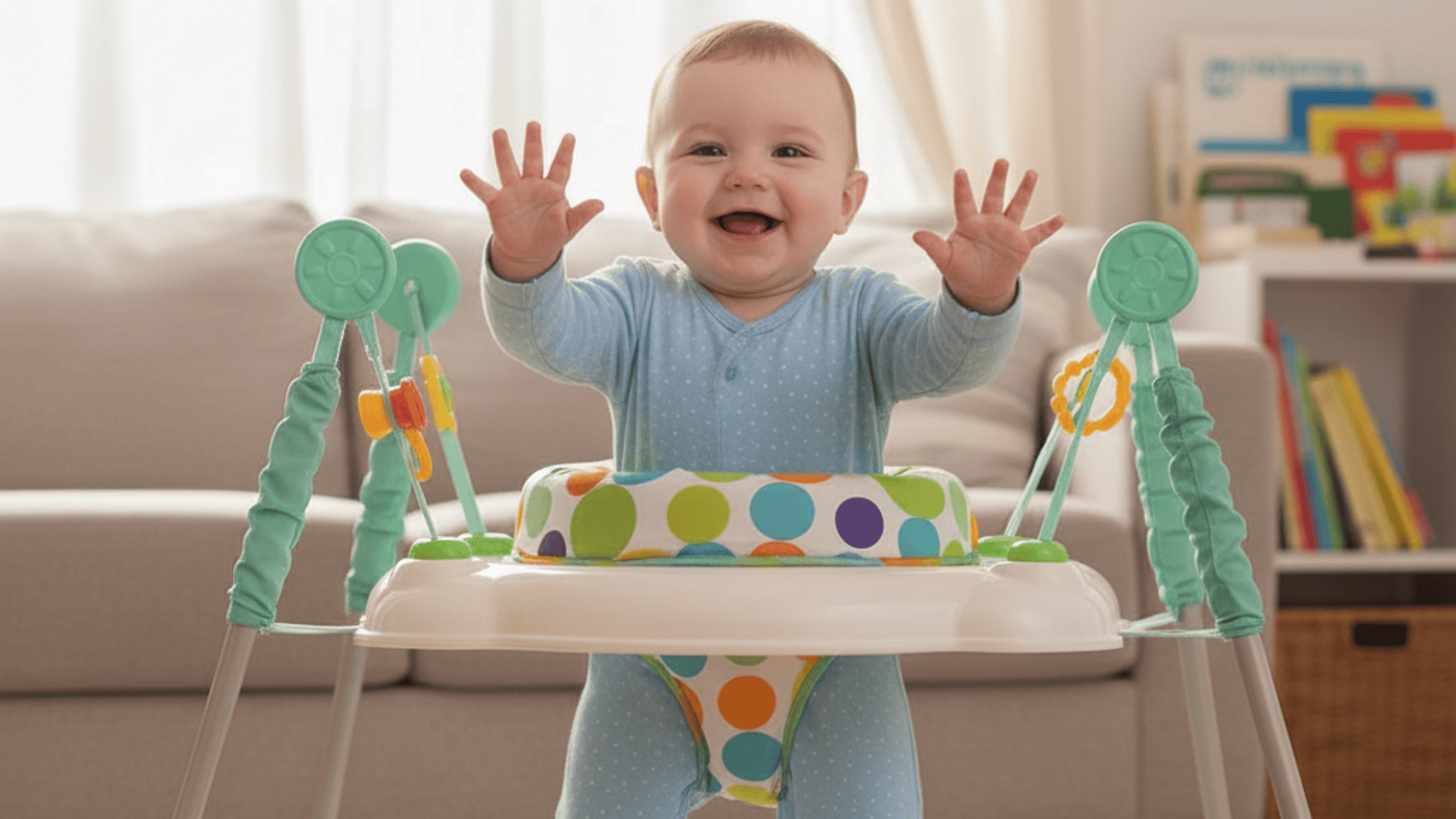
A baby jumper can be used safely only when your little one has enough strength and control to handle it.
Most babies reach this stage around five to six months, when they can hold their head steady and sit upright with minimal support. Using a jumper before this age can strain their neck and back muscles, which are still developing.
It’s also important to stop once your baby begins walking independently or exceeds the weight limit (usually 25–30 pounds) listed by the manufacturer.
Even when used correctly, jumpers should be limited to short, supervised sessions about 15 to 20 minutes at a time, once or twice a day.
Note: Longer use can lead to overstimulation or unnecessary pressure on hips and joints.
Balancing jumper time with plenty of floor play, crawling, and tummy time helps your baby grow stronger and move more naturally.
How Baby Jumpers Affect Physical Development
Understanding how jumpers impact physical growth helps parents make informed choices about playtime. While they seem fun and harmless, the way jumpers support a baby’s body can affect how muscles and coordination develop.
- Limited muscle engagement: Jumpers let babies bounce without using the core and leg muscles needed for crawling, sitting, and standing.
- Delayed milestones: Relying on jumper support may slow progress in balance, strength, and coordination.
- Toe-standing habit: Babies often push off their toes, which can affect natural foot positioning and lead to tight leg muscles.
- Joint strain: Unnatural weight support places extra pressure on the hips, knees, and ankles.
- Core weakness: Extended use can reduce opportunities to build stability through natural movement.
- Safe practice: Short, supervised sessions are unlikely to cause harm, but frequent use can interfere with proper motor development.
- Healthier alternative: Floor play, rolling, and tummy time remain the best ways for babies to strengthen muscles and move naturally.
Used thoughtfully, jumpers can be part of playtime, but they should never replace free movement that helps babies grow stronger and more confident
How to Use a Jumper Safely
Even a well-made baby jumper can be risky if it’s not used properly. With a few simple precautions, you can make playtime safe and enjoyable for your baby:
1. Setup and Environment
Always place the jumper on a flat, stable surface to prevent tipping. Keep it away from stairs, furniture, and sharp edges where your baby could bump or fall.
Leave enough open space for movement so your baby doesn’t hit walls or door frames while bouncing. If you’re using a doorway jumper, check that the frame is sturdy and the clamp is locked tightly before playtime.
2. Supervision and Time Limits
Never leave your baby alone in a jumper. Babies can shift or bounce unpredictably, so constant supervision is important.
Limit each session to 15–20 minutes, once or twice a day, and stop if your baby seems tired or overstimulated. Short, closely monitored sessions help avoid muscle strain and keep playtime fun.
3. Product Safety Checklist
Before using a baby jumper, review this quick safety checklist:
- Inspect the jumper for any loose parts, cracks, or damage.
- Ensure the seat fits snugly and doesn’t pinch your baby’s legs.
- Check that all straps, springs, and clamps are secure.
- Place the jumper on a flat, non-slip surface to prevent sliding.
- Keep the surrounding area clear of toys, cords, and furniture.
- Recheck stability once your baby is seated.
A brief inspection before each use helps ensure safe and comfortable playtime.
Conclusion
So, are baby jumpers safe for your little one? They can be enjoyable tools when used responsibly, but they’re not a must-have for healthy growth.
The key lies in moderation, allowing the baby to play freely and find different movements, which builds stronger, more natural skills over time.
Jumpers should complement, not replace, active play that helps babies gain coordination and confidence.
Always focus on creating an environment that supports curiosity, movement, and connection. Every minute of play is a chance for your baby to learn something new.